
And the Korean SPFs That Actually Fix Them
Sunscreen · 2026
You wear sunscreen every single day. You’ve done everything right. So why do you still notice a new dark spot showing up, or fine lines that seem a little deeper every year?
The truth is, most people aren’t skipping sunscreen — they’re using it wrong. Not enough product, the wrong formula for what your skin actually needs, or skipping the reapplication that protects you past noon. Sunscreen only works as well as you use it, and small gaps add up over years of daily wear.
This isn’t another “best sunscreen for your skin type” list. This is about the specific mistakes that quietly let sun damage through — even when you think you’re fully covered — and the Korean formulas built to close each one.
Quick Answer
Most visible skin aging comes from cumulative, everyday UV exposure — not sunburn. The biggest sunscreen mistakes are applying too little product, skipping reapplication, choosing a formula for its SPF number instead of comfort, and assuming sunscreen alone will fade dark spots you already have. Fixing these habits, not switching sunscreens, protects your skin long-term.
At a Glance
- #1 SPF number obsession: Beauty of Joseon Relief Sun (PA++++ + antioxidants)
- #2 Applying too little: Missha All-Around Safe Block Sun Milk
- #3 Expecting SPF to fade spots: Dr.G Brightening Up Sun (niacinamide)
- #4 Skipping reapplication: TOCOBO Cotton Soft Sun Stick
- #5 Ignoring actives-day sensitivity: Aestura Derma UV 365 (ceramides)
Quick Check: Which Sunscreen Mistake Is Costing You the Most?
Quick Check
Which Sunscreen Mistake Is Costing You the Most?
Mistake #1: Thinking the SPF Number Is All That Matters
SPF only measures protection against UVB rays — the ones that cause sunburn. UVA rays, which drive most premature aging and pigmentation, are measured separately by the PA rating (PA+ to PA++++). A sunscreen can have a high SPF and still leave your skin exposed to the rays that cause wrinkles and dark spots.
UV exposure also triggers free radicals that break down collagen and elastin slowly, over years, with no visible sign day to day. A filter alone blocks the rays; it doesn’t neutralize that oxidative damage.
The fix: look for PA++++ specifically, and choose a formula that pairs UV filters with antioxidant ingredients, not filters alone.
Recommended Product:
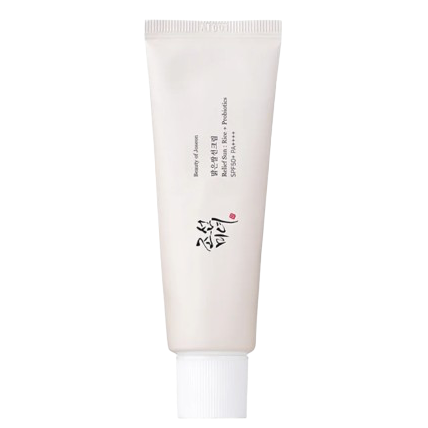
Beauty of Joseon Relief Sun: Rice + Probiotics SPF50+ PA++++
Best for: Anyone building a long-term anti-aging routine
Why we recommend it: It combines broad-spectrum PA++++ protection with rice bran water and probiotic ferments that support your skin’s natural antioxidant defense, in a lightweight finish with no white cast. We cover this same antioxidant-plus-barrier approach in more depth in our guide to building a simpler, more effective skincare routine.
Key ingredients: Rice bran water, probiotic ferments, niacinamide
Potential downside: Contains a small amount of fragrance from the natural extracts, which may not suit very fragrance-sensitive skin.
Avoid if: you need a completely fragrance-free formula (see Mistake #6 for that).
Shop Beauty of Joseon Relief Sun
Mistake #2: Applying Far Less Than You Think
Dermatology guidance recommends about a quarter teaspoon of sunscreen for the face alone — roughly a nickel-sized amount. Most people apply less than half of that, which can cut the effective, tested SPF protection dramatically. Expensive or precious-feeling sunscreens make this worse, because it’s natural to ration a product that feels costly to use up.
The fix: keep an affordable, generous-format sunscreen on hand that you won’t hesitate to apply liberally every single morning.
Recommended Product
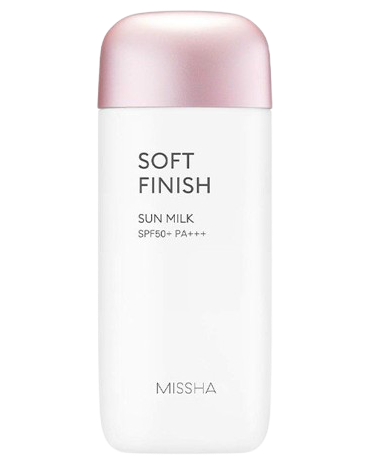
Missha All-Around Safe Block Sun Milk SPF50+ PA+++
Best for: Anyone who tends to under-apply because their sunscreen feels too precious to use generously
Why we recommend it: It’s budget-friendly, comes in a large bottle, and has a lightweight milk texture that spreads easily across the full face and neck without feeling wasteful to use in a real amount.
Key ingredients: Broad-spectrum UV filters, soothing plant extracts
Potential downside: Fewer added actives than newer formulas — it’s a straightforward sunscreen rather than a multitasking treatment product.
Avoid if: you want a formula that also targets brightening or anti-aging (see Mistakes #1 and #3).
Shop Missha All-Around Safe Block Sun Milk
Mistake #3: Expecting Sunscreen to Fade Spots You Already Have
Sunscreen prevents new pigmentation and keeps existing dark spots from getting darker, but it won’t fade them on its own. That job belongs to a targeted treatment ingredient. Wearing sunscreen without addressing existing spots means you’re maintaining the problem, not solving it. If fading pigmentation is your main goal, pairing this with a dedicated brightening serum will get you there faster — see our comparison of two Korean vitamin C serums that layer well under sunscreen.
The fix: choose a sunscreen formulated with a brightening active, so protection and treatment happen in the same step instead of competing for room in your routine.
Recommended Product
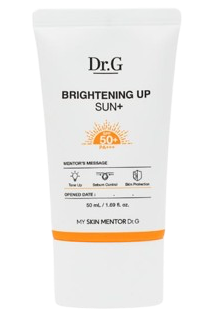
Dr.G Brightening Up Sun SPF50+ PA++++
Best for: Fading post-acne marks or sun-related dark spots while staying protected
Why we recommend it: It combines broad-spectrum protection with niacinamide, so it protects against new damage and supports fading of existing pigmentation at the same time, instead of only blocking new sun exposure.
Key ingredients: Niacinamide, adenosine
Potential downside: Brightening actives can feel slightly drying on very dry skin if worn without a moisturizer underneath.
Avoid if: your skin already feels tight or flaky — layer a hydrating moisturizer first.
Mistake #4: Skipping Reapplication Because It Ruins Your Makeup
Sunscreen protection fades after about two hours of sun exposure, regardless of the SPF number on the bottle. Most people apply once in the morning and never again, which means the second half of most days is spent with reduced protection — usually because reapplying feels impossible over makeup.
The fix: keep a stick formula in your bag for a quick midday reapplication that doesn’t disturb your makeup or require touching your face with wet hands.
Recommended Product
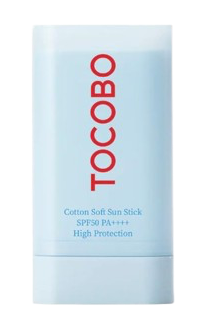
TOCOBO – Cotton Soft Sun Stick SPF50 PA++++
Best for: Reapplying midday over makeup without smudging it
Why we recommend it: The solid stick glides on in seconds without disturbing makeup underneath, and it’s easy to toss in a bag for real, consistent reapplication instead of skipping it altogether.
Key ingredients: Centella Asiatica, Panthenol
Potential downside: Stick formulas are harder to apply evenly across the neck and ears, so pair it with a cream sunscreen for full coverage earlier in the day.
Avoid if: you’re looking for a single product to cover your whole face and body, not just touch-ups.
Mistake #5: Not Adjusting Your Sunscreen on Retinol or Vitamin C Days
Retinol, vitamin C, and exfoliating acids all increase photosensitivity and can temporarily thin the skin barrier. On days you use these actives, your skin is more reactive and more vulnerable to UV damage — which makes the sunscreen you layer on top more important, not less.
The fix: reach for a ceramide-rich, barrier-focused sunscreen on the days your routine includes stronger actives.
Recommended Product
Aestura – Derma UV 365 Barrier Hydro Mineral Sunscreen SPF50+ PA++++
Best for: Skin that regularly uses retinol, vitamin C, or exfoliating acids
Why we recommend it: It’s built on the brand’s barrier-repair Atobarrier formula, so it protects against UV exposure while also replenishing ceramides your barrier needs when it’s more reactive from actives. This ceramide-first approach is the same one we recommend in our Korean moisturizer guide for anyone rebuilding a compromised barrier.
Key ingredients: Ceramides, panthenol
Potential downside: Richer finish than gel-type sunscreens, which may feel heavy on very oily skin.
Avoid if: you have very oily skin and prefer a matte, gel-like finish.
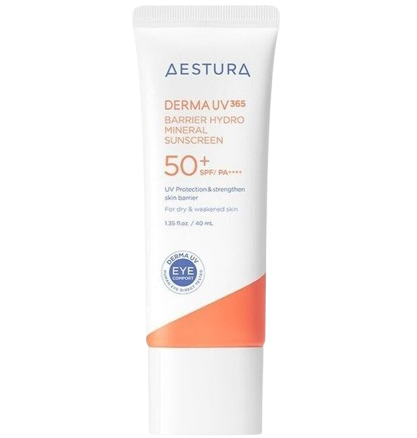
Shop Aestura Dream UV 365 Sunscreen
Mistake #6: Picking Sunscreen by SPF Alone Instead of What You’ll Actually Wear
Consistency matters more than the SPF number on any single bottle. Many people abandon a sunscreen within weeks because of the scent, a greasy feel, or irritation — and the gap in daily wear does more damage than any difference between SPF 30 and SPF 50 ever would. If oiliness, not sensitivity, is your bigger daily struggle, our dedicated guide to Korean sunscreens for oily and acne-prone skin has three more targeted picks.
The fix: choose a gentle, unscented formula built for sensitive or reactive skin, so it becomes a habit you keep instead of a product that sits half-used in a drawer.
Recommended Product
Purito Centella Green Level Unscented Sun SPF50+ PA++++
Best for: Building a sunscreen habit that actually sticks, especially for sensitive skin
Why we recommend it: It’s fragrance-free and built around a centella complex designed to minimize common irritation triggers — one of the most consistently recommended “daily driver” Korean sunscreens for exactly that reason.
Key ingredients: Centella asiatica complex, tocopherol
Potential downside: Can leave a faint cast on deeper skin tones if it isn’t blended in quickly.
Avoid if: you specifically want a tinted, makeup-replacing formula — see our skin-type sunscreen matching guide for tinted options.
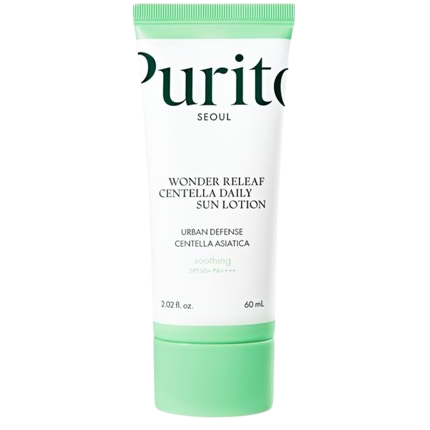
Shop Purito Centella Green Level Unscented Sun
The 6 Mistakes and Their Fixes, at a Glance
| Mistake It Fixes | Product | Key Ingredient | Best For |
|---|---|---|---|
| #1 Filters without antioxidants | Beauty of Joseon Relief Sun | Rice + probiotics | Long-term anti-aging |
| #2 Applying too little | Missha All-Around Safe Block Sun Milk | Broad-spectrum filters | Generous daily use |
| #3 Expecting SPF to fade spots | Dr.G Brightening Up Sun | Niacinamide | Fading dark spots |
| #4 Skipping reapplication | TOCOBO Cotton Soft Sun Stick | Centella Asiatica + Panthenol | Reapplying over makeup |
| #5 Ignoring actives-day sensitivity | Aestura Atobarrier 365 Sun Cream | Ceramides | Retinol / vitamin C days |
| #6 Choosing by SPF number alone | Purito Centella Green Level Unscented Sun | Centella complex | Sensitive, daily-wear skin |
Swipe to see all columns →
Sunscreen isn’t a single decision you make once at checkout — it’s a daily habit made up of small choices: how much you apply, whether you reapply, and whether the formula fits into a routine you’ll actually keep up. None of these six mistakes are about failing at skincare. They’re just easy gaps to miss, and every one of them has a simple fix. For more affordable, everyday picks across every skin type, browse our full sunscreens hub.
Start with whichever mistake sounds most like you. You don’t need to overhaul your whole routine at once — fixing even one of these habits, consistently, will do more for your skin over the next few years than switching sunscreens ever will.
Frequently Asked Questions
What’s the most common Korean sunscreen mistake people make?
Applying too little product. Most people use less than half of the roughly quarter-teaspoon needed to get the SPF protection listed on the bottle, which quietly reduces protection every day regardless of how good the formula is.
Can sunscreen alone reverse sun damage I already have?
No. Sunscreen prevents new damage and stops existing dark spots from getting darker, but fading pigmentation you already have requires a targeted treatment ingredient like niacinamide, vitamin C, or a dermatologist-recommended active alongside daily SPF.
How much sunscreen should I actually be applying to my face?
About a quarter teaspoon, roughly the size of a nickel-sized dollop, for the face alone. Most people apply less than half of that, which reduces the tested protection level significantly even with a high SPF number.
Do I need to wear sunscreen indoors if I’m mostly near windows or screens?
UVA rays can pass through glass, so sun exposure near windows still adds up over time, even without direct sunlight. It’s a smaller factor than daily outdoor exposure, but it’s part of why dermatologists recommend daily wear rather than only on sunny days.
Should I switch to a different sunscreen on days I use retinol or vitamin C?
You don’t have to switch completely, but a ceramide-rich, barrier-supporting sunscreen is worth prioritizing on those days, since your skin barrier is more reactive and more vulnerable to irritation and UV damage while using stronger actives.
How often do I really need to reapply sunscreen during the day?
Roughly every two hours with sun exposure, and immediately after sweating or swimming. If reapplying over makeup feels impossible, a stick or cushion formula makes it realistic to actually do.
Can using the wrong sunscreen actually make dark spots worse?
Indirectly, yes. A sunscreen you don’t reapply, don’t use enough of, or stop wearing because it feels unpleasant leaves gaps in protection. Those gaps let UV exposure continue driving the pigmentation you’re trying to fade.
Is a higher SPF number always more protective against aging?
Not if it changes how consistently you wear it. An SPF 30 or 50 sunscreen you apply generously and reapply throughout the day protects you more, over time, than an SPF 50+ formula you use sparingly or skip because it feels heavy.