
Sunscreens · 2026
Quick Answer
If your sunscreen makes your oily or acne-prone skin greasier or more congested, it’s not you, it’s the formula. Most Western sunscreens are too heavy for oily skin. These 3 Korean sunscreens control oil, hydrate where you actually need it, or calm irritation, without the heavy, pore-clogging feel of most Western SPF.
What to Look for in a Sunscreen for Oily or Acne-Prone Skin
Two things matter most:
SPF 50+ PA++++ — the PA rating measures UVA protection, which is what darkens acne scars. Don’t skip it.
Sebum-controlling or barrier-friendly ingredients — depending on whether your main issue is oiliness, breakouts, or sensitivity, the right active ingredient changes everything.
Also make sure you’re actually removing it properly at night, our Korean double cleanse guide covers exactly how.
Quick Check
Which Korean Sunscreen Fits Your Skin?
At a Glance
- Very oily, congested skin: Dr. Ceuracle 5α Control No-Sebum Sun Lotion
- Dehydrated oily skin: Round Lab Birch Juice Moisturizing Sunscreen
- Combination, sensitive-leaning skin: COSRX Aloe Soothing Sun Cream
The 3 Best Korean Sunscreens for Oily, Acne-Prone & Sensitive Skin
1. Dr. Ceuracle 5α Control No-Sebum Sun Lotion SPF50+ PA++++
Best for: Oily skin that gets visibly shiny and congested
This one is built specifically around a hormone called 5-Alpha Reductase — the hormone that triggers excess sebum production. The 5α Complex targets that hormone directly, controlling and balancing oil at the source rather than just absorbing surface shine.
It leaves a matte, non-greasy finish and provides a natural tone-up effect — making it a great base before makeup. It’s a physical sunscreen, which also means it’s gentler on reactive skin and won’t sting.
Who it’s for: Oily skin with active congestion, enlarged pores, or anyone who needs real, all-day oil control.
Key ingredient: 5α Complex (targets 5-alpha reductase)
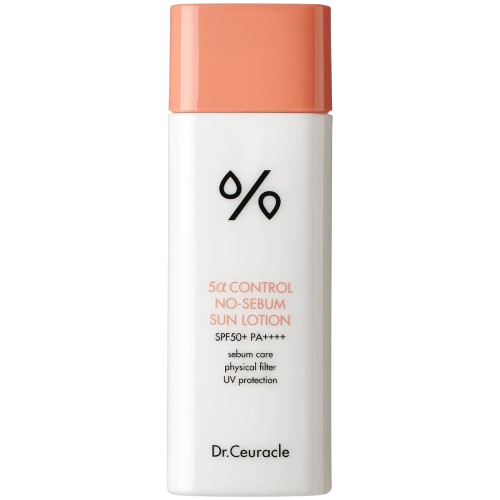
Shop Dr. Ceuracle 5α Control Sun Lotion
2. Round Lab Birch Juice Moisturizing Sunscreen SPF50+ PA++++
Best for: Dehydrated oily skin that overproduces oil to compensate for lack of moisture.
This is the most misunderstood skin type — and the most underserved by sunscreens. Oily skin that’s also dehydrated needs hydration, not just matte coverage. Without it, skin produces even more oil.
Round Lab’s Birch Juice Sunscreen solves that. Birch juice is naturally rich in minerals and amino acids that deeply hydrate without heaviness — giving skin what it needs to stop overcompensating with oil.
The formula has a more watery texture that feels lightweight and cooling on application — absorbing quickly without leaving a greasy or sticky residue. It lands between dewy and natural finish, never shiny.
Who it’s for: Oily or combination skin that feels tight or dull underneath the shine — a sign your skin is dehydrated, not just oily.
Key ingredient: Birch juice (minerals + amino acids)
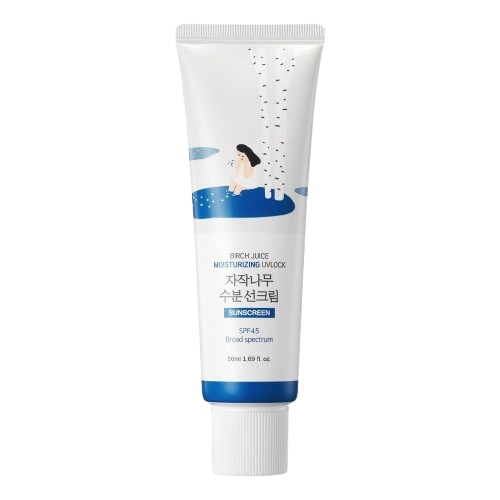
Shop Round Lab Birch Juice Sunscreen
3. COSRX Aloe Soothing Sun Cream SPF50+ PA+++
Best for: Oily-combination skin that also needs calming without heaviness
Formulated with a high concentration of Aloe Vera leaf extract, this sunscreen soothes and moisturizes while staying non-greasy and fast-absorbing — suitable for daily use even under makeup.
It won’t give you the matte finish of the Dr. Ceuracle, but it’s the most comfortable of the three for skin that sits between oily and sensitive — hydrated but not heavy. It’s unscented, contains skin-beneficial ingredients, and doesn’t feel silicone-heavy, tight, or dry after application.
Who it’s for: Combination or oily skin that doesn’t love heavy textures — and wants a gentle, affordable daily option.
Key ingredient: Aloe vera leaf extract
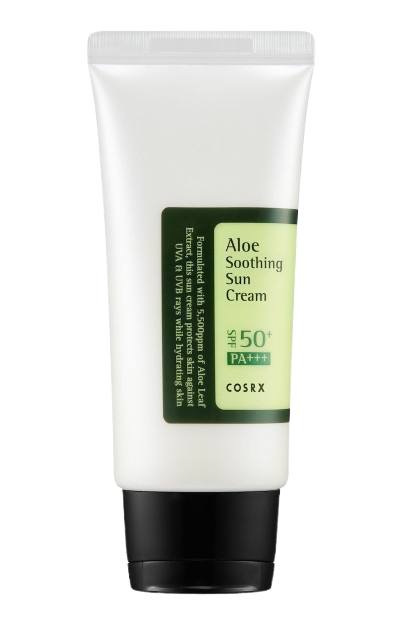
Korean Sunscreen Comparison
| Sunscreen | Best For | Key Ingredient | Finish |
|---|---|---|---|
| Dr. Ceuracle 5α Control | Very oily, congested skin | 5α Complex | Matte, tone-up |
| Round Lab Birch Juice | Dehydrated, oily skin | Birch juice | Watery, cooling, dewy |
| COSRX Aloe Sun Cream | Combination, sensitive-leaning | Aloe vera leaf extract | Non-greasy, gentle |
Swipe to see all columns →
So Which One Should You Get?
Sunscreen is non-negotiable — especially for acne-prone skin. UV exposure darkens post-breakout marks and makes them take months longer to fade. If you’re already dealing with marks that won’t budge, see our guide on why dark spots aren’t fading to find the right treatment alongside your SPF.
The right formula protects you and works with your skin type. Pick the one that matches your biggest daily concern, and wear it every single day. That’s the one step that actually makes a difference.
If breakouts are your main concern alongside oil control, pair your sunscreen with one of the best Korean serums for acne-prone skin, and check out our full sunscreens hub for more picks.
Frequently Asked Questions
Why does my sunscreen make my oily skin worse?
Most Western sunscreens are formulated for average skin and rely on heavy emollients or silicones that sit on top of oily skin, trapping sebum and clogging pores. Korean sunscreens for oily skin use lighter, sebum-controlling or hydrating actives instead, so they don’t add to the shine or congestion.
What does PA++++ mean on Korean sunscreens?
PA stands for Protection Grade of UVA, and the plus signs show how much UVA protection a sunscreen offers, up to PA++++. UVA rays are what darken acne scars and cause long-term damage, so a high PA rating matters as much as the SPF number.
What is the 5-alpha reductase hormone and why does it matter for oily skin?
5-alpha reductase is a hormone that triggers excess sebum production in the skin. Ingredients like the 5-alpha Complex in Dr. Ceuracle’s sunscreen target this hormone directly, controlling oil at the source instead of just absorbing shine on the surface.
Can dehydrated skin also be oily?
Yes. When skin lacks water, it often overproduces oil to compensate, leaving it shiny on the surface but tight or dull underneath. This skin type needs hydrating ingredients, like the birch juice in Round Lab’s sunscreen, rather than just matte, oil-absorbing formulas.
Can I wear Korean sunscreen under makeup?
Yes, all three of these sunscreens are designed to sit well under makeup. Dr. Ceuracle’s tone-up finish in particular works as a makeup base, while the Round Lab and COSRX formulas absorb quickly enough to layer over without pilling.
Which Korean sunscreen is best for acne-prone skin?
Dr. Ceuracle’s 5-alpha Control No-Sebum Sun Lotion is the best pick for actively congested, acne-prone skin, since it directly targets excess sebum production and leaves a matte finish. It’s also a physical sunscreen, which tends to be gentler on reactive, breakout-prone skin.
How much sunscreen should I actually apply?
Most people apply far less than they need. Aim for roughly a nickel-sized amount for your face alone, and reapply every 2 hours if you’re outdoors, or at least once midday if you’re mostly indoors.