
Skin Concerns · 2026
You’ve been misting your face. Your skin still looks dull, tight, or greasy an hour later. That’s not a hydration problem. That’s a product problem.
Quick Answer
Most face mists are just water, so they evaporate before they can do anything for your skin. These four Korean mists work because they’re built around real actives, PDRN, ceramides, fermented ingredients, that actually absorb. Match yours to your skin concern: dull and oily, combination, acne-prone and healing, or sensitive and reactive.
What Makes These Face Mists Different
Cheap mists are mostly water. They evaporate fast and sometimes pull moisture out of your skin as they go — leaving you drier than before.
These four work because they’re built around active ingredients: things like PDRN (a skin-repair compound), serum-level hydrators, and barrier-strengthening ceramides.
Ceramides are lipid molecules naturally found in your skin barrier. Skincare formulas add them back to help the barrier hold onto moisture and calm irritation, instead of just sitting on the surface like a plain water mist.
PDRN is a skin-repair compound originally used in clinical wound healing. In K-beauty it’s used to speed up skin recovery and boost hydration, which is why it shows up in mists aimed at acne-prone or healing skin. If you want the full picture on this ingredient, our PDRN guide covers what it does and how to choose a product built around it.
Quick Check
Which Face Mist Matches Your Skin?
At a Glance
- Dull, dehydrated + oily skin: d’Alba First Spray Serum
- Dry patches + oily T-zone: Dr. Althea Cream Mist
- Acne-prone, healing skin: Anua PDRN Hyaluronic Face Mist
- Sensitive, reactive skin: Aestura Atobarrier 365 Cream Mist
The 4 Mists — And Who Each One Is Actually For
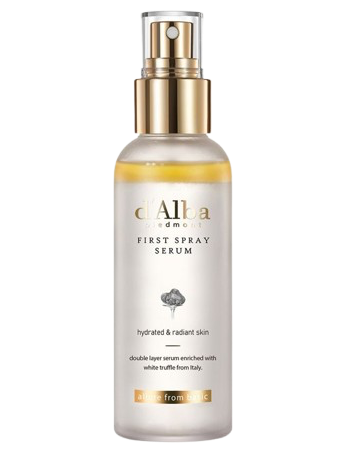
1. d’Alba First Spray Serum
Best for: Dull, dehydrated skin that also gets oily
This one blurs the line between serum and mist. It’s loaded with white truffle extract and fermented ingredients that brighten and plump — without feeling heavy or sticky.
If your skin looks flat and tired by midday, this is the one to try first.
Key ingredient: White truffle extract + fermented ingredients
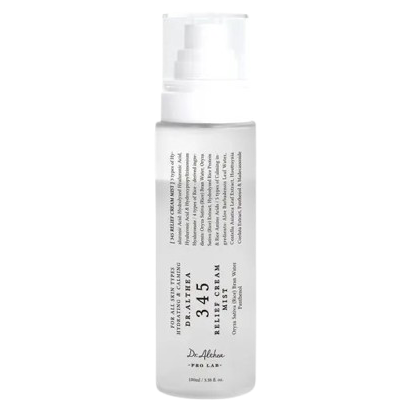
2. Dr. Althea Cream Mist
Best for: Dry patches + oily T-zone (combination skin)
The texture is what sets this apart — it mists on like water but feels like a light cream on contact. It balances without overloading.
If you’ve avoided mists because they feel too watery or do nothing for your dry areas, this is your answer.
Key ingredient: Panthenol + centella complex
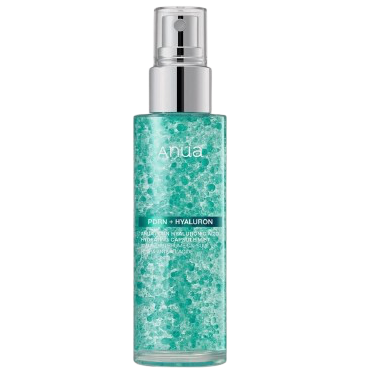
3. Anua PDRN Hyaluronis Face Mist
Best for: Acne-prone skin that needs repair, not just hydration
PDRN is a next-level ingredient — it’s used in clinical skin treatments to accelerate healing. Paired with hyaluronic acid, this mist hydrates and actively helps post-breakout skin recover faster.
If you’re dealing with active breakouts or marks left behind from old ones, this is the most targeted option here.
Key ingredient: PDRN + hyaluronic acid
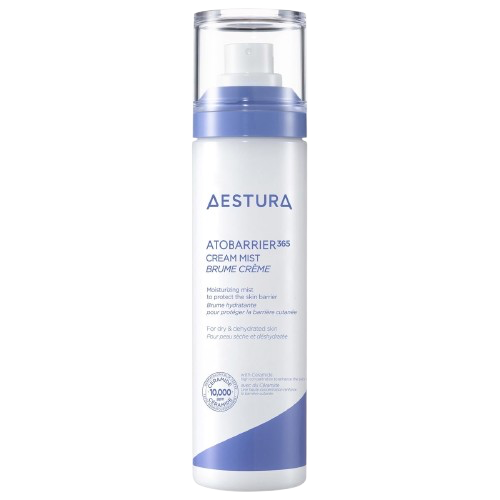
4.Aestura Atobarrier 365 Cream Mist
Best for: Sensitive, reactive skin that flares easily
Aestura is a dermatologist-recommended brand in Korea — popular in clinics, not just beauty stores. This mist is ceramide-based, which means it focuses on repairing and reinforcing your skin barrier.
If your skin reacts to most things, stings after cleansing, or feels constantly “angry” — start here. It’s the gentlest of the four, and probably the most underrated. If your reactivity goes beyond what a mist alone can fix, our skin barrier repair guide covers the daily habits that are quietly undoing your progress.
Key ingredient: Ceramides
Face Mist Comparison
| Mist | Best For | Key Ingredient | Texture |
|---|---|---|---|
| d’Alba First Spray Serum | Dull, oily skin | White truffle + ferments | Serum-like, light |
| Dr. Althea Cream Mist | Combination skin | Panthenol + centella | Watery mist, creamy finish |
| Anua PDRN Mist | Acne-prone, healing skin | PDRN + hyaluronic acid | Light, hydrating |
| Aestura Atobarrier 365 | Sensitive, reactive skin | Ceramides | Rich, barrier-focused |
Swipe to see all columns →
So Which One Should You Get?
Glass skin isn’t about using more products — it’s about using the right ones.
Pick the mist that matches your actual problem, use it consistently, and your skin will do the rest. If breakouts are the main issue, pair your mist with one of the best Korean serums for acne-prone skin. If you’re curious how a heartleaf-forward brand like Anua compares to something more nourishing, our Anua vs. Beauty of Joseon comparison is a good next read.
Start with the one that felt most “that’s me” while reading.
Frequently Asked Questions
Why doesn’t my face mist give me glass skin?
Most face mists are mostly water, so they evaporate quickly and can even pull existing moisture out of your skin as they dry. Glass skin comes from mists built around active ingredients like PDRN, ceramides, or fermented extracts that actually absorb instead of just sitting on the surface.
What’s the difference between a hydrating mist and a hydrating serum?
A serum is usually more concentrated and applied in drops, while a mist is sprayed on and meant to be layered throughout the day. Some newer Korean mists, like d’Alba’s First Spray Serum, blur this line by packing serum-level actives into a spray format.
What is PDRN and why is it in skincare mists?
PDRN (polydeoxyribonucleotide) is a skin-repair compound originally used in clinical wound healing. In skincare, it helps speed up skin recovery and boost hydration, which is why it’s used in mists aimed at acne-prone or healing skin.
Do ceramide mists work for oily skin?
Yes. Ceramides support the skin barrier rather than adding oil, so they can help balance oily and combination skin that’s actually dehydrated underneath, not just excess oil on the surface.
How often should I use a face mist?
Most people can use a hydrating face mist 2-3 times a day, including right after cleansing and any time skin feels tight or dull. Always follow with a moisturizer to lock the hydration in.
Can I use a face mist instead of a moisturizer?
No. A mist adds a layer of hydration, but without a moisturizer or cream on top to seal it in, that hydration evaporates just as quickly as it did before, undoing the benefit.
Which Korean face mist is best for sensitive skin?
Aestura Atobarrier 365 Cream Mist is the best pick for sensitive, reactive skin here. It’s ceramide-based and dermatologist-recommended in Korea, focused on repairing and reinforcing the skin barrier rather than adding fragrance or actives that might irritate.