
Serum Comparison · 2026
Quick Answer
Dr. Althea’s 63% Vitamin C works faster on stubborn dark spots, but it’s not for everyone. The 20% is the safer, still-effective choice for sensitive skin, oily or combination skin, and anyone new to high-strength actives. Start with the 20% unless you already tolerate actives well and lower strengths haven’t worked.
Why Concentration Actually Matters
More of it doesn’t always mean better results. It means faster results — with higher risk.
Pure Vitamin C works by blocking melanin production. That’s what fades dark spots. But at higher concentrations, it can sting, cause purging (a temporary increase in breakouts as skin adjusts), and overwhelm a compromised skin barrier.
So the real question isn’t which one is stronger — it’s which one your skin can actually handle.
If even 20% feels like too much for your skin, look for gentler Vitamin C derivatives such as sodium ascorbyl phosphate or ascorbyl glucoside. They’re more stable and less irritating than pure L-ascorbic acid, though they typically work more slowly.If your skin is breakout-prone on top of being sensitive, our guide to the best Korean serums for acne-prone skin covers calmer options built for that combination.
Quick Check
Which Strength Fits Your Skin?
1. Have you used a Vitamin C serum before?
2. How would you describe your skin?
3. What’s your main concern?
At a Glance
- Deep, stubborn hyperpigmentation, experienced users: Dr. Althea Vitamin C 63%
- General brightening, first-time high-strength users: Dr. Althea Vitamin C 20%
- Very reactive skin: gentler derivatives like sodium ascorbyl phosphate or ascorbyl glucoside
The Two Dr. Althea Vitamin C Serums
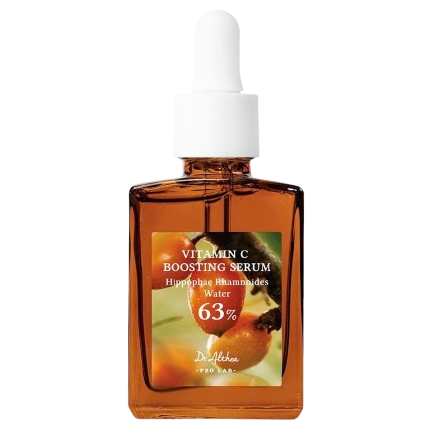
Dr. Althea Vitamin C 63%
Best for: Experienced skincare users with stubborn, deep hyperpigmentation.
This is one of the highest concentrations available in a K-beauty serum — and it shows. The 63% formula is built for serious dark spots, sun damage, and skin that hasn’t responded to lower-strength options.
At this level, results can come faster. But so can irritation. This is not a beginner serum. It needs to be introduced slowly, and it’s not suitable for reactive or acne-prone skin.
Key ingredients: 63% Vitamin C (L-ascorbic acid)
Who it’s for: Normal to oily skin, no active breakouts, already comfortable using Vitamin C actives.
Avoid if: You have sensitive, reactive, or acne-prone skin, or you’ve never used a Vitamin C serum before.
Dr. Althea Vitamin C 20%
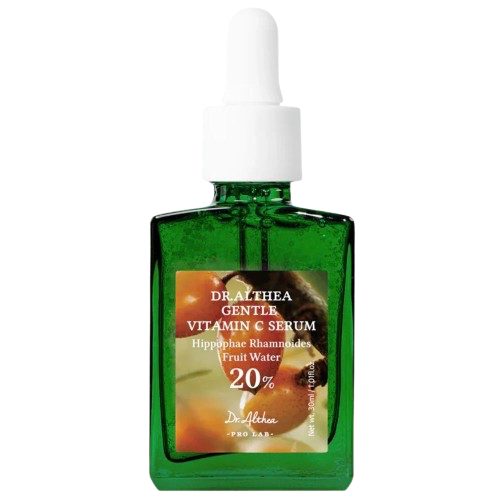
Best for: Dark spots and dull skin — without going to extremes
20% is still a strong, effective dose. It’s the sweet spot for most people who want visible brightening without the risk of the 63%.
It fades hyperpigmentation, evens skin tone, and works consistently over time — especially on oily skin that produces excess melanin due to breakouts and inflammation.
This is the one most people should actually start with.
Key ingredients: 20% Vitamin C (L-ascorbic acid)
Who it’s for: Oily or combination skin, post-acne marks, uneven tone, or anyone new to high-strength brightening actives.
Avoid if: You have very reactive skin — even 20% can need a slow introduction.
Comparison Table
| 63% | 20% | |
|---|---|---|
| Strength | Very high | High |
| Best for | Deep, stubborn spots | General brightening |
| Sensitive skin? | No | With caution |
| Beginner-friendly? | No | Yes |
| Results speed | Faster | Steady |
| Irritation risk | Higher | Lower |
| Suggested start frequency | 2-3x per week | 3-4x per week |
Swipe to see both columns →
How to Introduce a Vitamin C Serum Without Irritation
- Patch test on your inner arm for 24-48 hours before applying to your face.
- Start with 2-3 uses per week, not daily.
- Apply after cleansing and toning, before moisturizer.
- Wear SPF every morning — this matters with any Vitamin C serum, since fresh skin cells are more visible.
- Avoid layering with strong exfoliating acids while your skin adjusts.
- Increase frequency slowly, only once your skin tolerates it without stinging or flaking.
So Which One Should You Get?
If you’ve never used a high-strength serum — or if your skin leans sensitive or acne-prone — start with the 20%. It’s effective, lower risk, and still delivers real results.
If you’ve been using it for a while, your skin tolerates actives well, and your dark spots just aren’t budging — the 63% is worth considering. Just introduce it slowly: two to three times a week at first.
Don’t jump to the strongest option just because it exists. The best serum is the one your skin can actually use consistently. Curious how Dr. Althea compares to other brands you might already own? Our Anua vs. Beauty of Joseon comparison and our roundup of K-beauty products worth your money are good next reads, and you can browse our full serums hub for more picks.
Frequently Asked Questions
What’s the difference between Dr. Althea Vitamin C 20% and 63%?
The main difference is concentration and irritation risk. The 20% is a strong, beginner-friendly dose suited to most skin types, while the 63% is one of the highest concentrations available in K-beauty, built for experienced users with stubborn hyperpigmentation.
Is Dr. Althea Vitamin C 63% safe for beginners?
No, it’s not recommended for beginners. At 63%, the risk of stinging, purging, and barrier irritation is much higher. Start with a lower concentration like the 20% and build tolerance first.
Can I use a Vitamin C serum on acne-prone skin?
Yes, but carefully. The 20% can help fade post-acne marks and even oily-skin tone, but the 63% is generally too strong for active breakouts or reactive skin. Introduce slowly and watch for irritation.
How often should I use a high-strength Vitamin C serum?
Start with 2-3 times a week for either strength, and only increase frequency once your skin shows no stinging, redness, or flaking. Daily use isn’t necessary to see results.
What should I do if a Vitamin C serum irritates my skin?
Stop using it and let your skin recover with a simple, gentle routine. If the 63% caused irritation, consider switching to the 20%, or a gentler derivative like sodium ascorbyl phosphate.
Can I use Vitamin C with retinol or other actives?
It’s best not to layer it with retinol or strong exfoliating acids in the same routine, especially while your skin is adjusting. Many people use it in the morning and retinol at night instead.
How long does it take to see results from a Vitamin C serum?
Most people notice brighter, more even-toned skin after 4-8 weeks of consistent use. Fading deeper hyperpigmentation with the 63% can happen faster, but consistency matters more than speed.